The Spark: Dice Experiment (Chirality Discovery)
Shannon entropy did not predict the measured spin times. Only repeated physical interventions — do(spin) — showed chirality: left-handed and right-handed dice that entropy scores as the same object and the trials do not.
The Dice Game That Started Everything
I wanted to understand real work in the world. So I spun dice — many times — and wrote down what happened.
Surgery has hard steps: picking the right tool and turning it just right, every single time. I designed a game with dice to test whether starting position would predict how long each spin takes.
The old idea: Information Entropy (Shannon, 1948). I tried it many times. The old math did not match the real times.
The Discovery: Handedness
Some dice are right-handed and some left-handed. You cannot turn one into the other by spinning or sliding. Shannon entropy gave the same number to both — but they are not the same for real physical work.
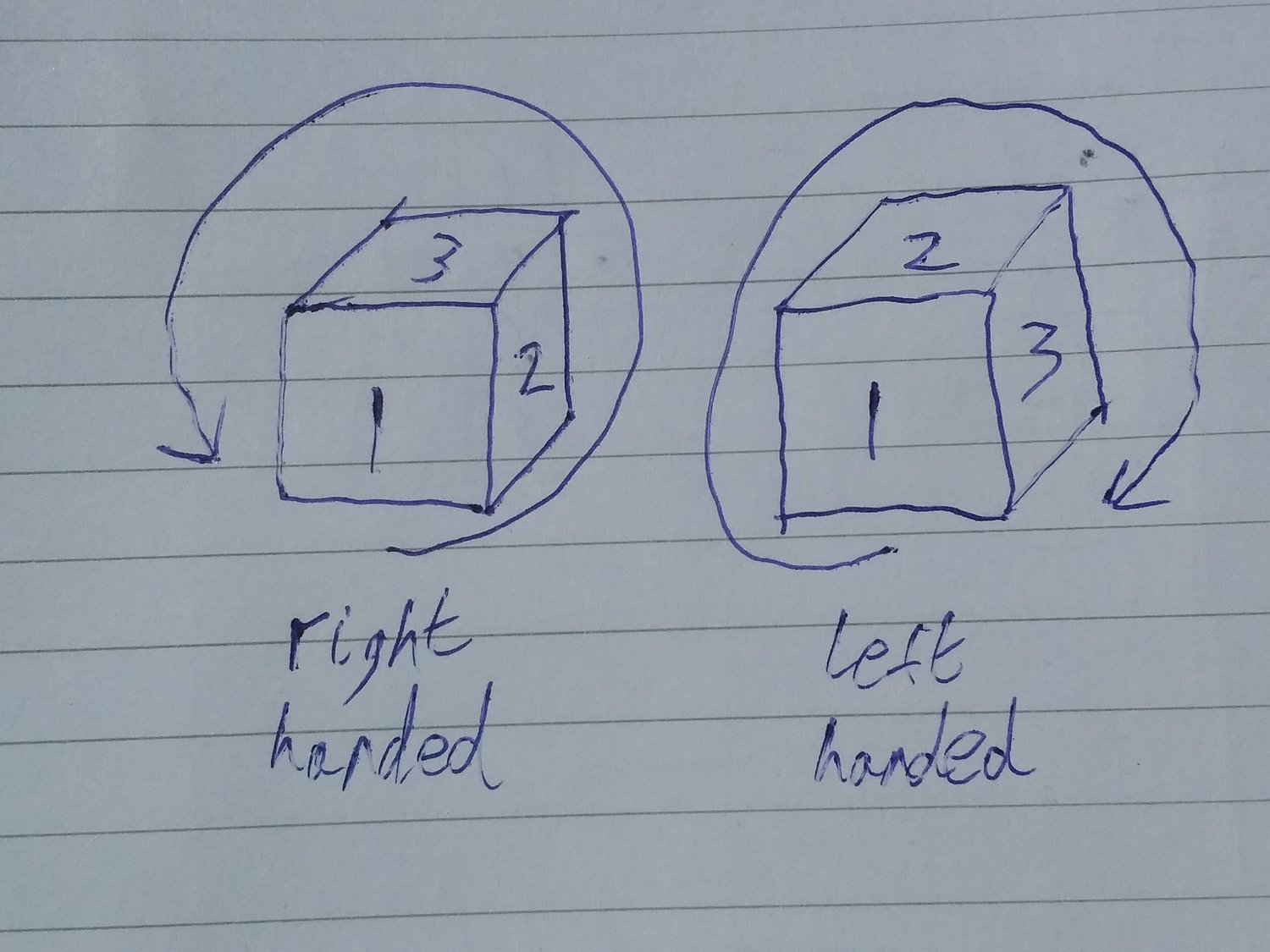
No spin or slide converts left to right. Mirror images do not match. This is chirality.
Try It: Simulate a Dice Spin
Click to perform a do(spin) intervention. Each spin is a real constructor operation — not a draw from a probability distribution.
Face 1 up · North (0°)
Elapsed: —
24 distinct orientational states exist for a surgical instrument. Only one is ★ required.
The Causal Chain — 5 do-Actions
Why causal levels matter
The dice study is a Level 2 do-action. Shannon (Level 1 association) failed. Only intervention on the real world revealed what probability alone could not.
The JointSpace Framework
JointSpace is the contact surface where a living agent and a tool exchange force and information. A joint reconstruction is one such surface: anatomy and engineered materials meet through a fixed sequence of constructor operations.
What Is JointSpace?
In surgery, the joint space is the gap between articulating bone surfaces. Extended: any interface where an animate agent and inanimate system exchange information and force.
- → Surgeon's hand → instrument → anatomy
- → Scrub tech → sterile field → surgeon
- → Operating team → procedure → restored function
Possible vs Impossible
The fundamental question is not how probable an outcome is. It is whether it can be caused at all.
Team capacity meets procedure demand. Outcome is reproducible.
Capacity below demand. Failure is structurally guaranteed — not merely probable.
The Causal Pathway
Each step is a do() intervention — a constructor operation that propagates forward. Errors at any node propagate downstream.
decides
position)
tech
state ★)
transformed
Operating rhythm is the observable signature of this chain executing within constructor capacity. When rhythm degrades, a constructor operation has failed.
24 Rotational States of a Surgical Instrument
For each of 6 faces pointing up, there are 4 rotational positions. The scrub technician must select ★ — the one state the surgeon requires.
★ = surgeon-required state. Red = physically wrong — task fails and propagates into the assembly pathway.
T* — The Pre-Operative No-Go Line
The culmination: when impossible physical movements make the planned assembly of do-operations a no-go zone.
T* is the boundary between a case this team-constructor can cause and one it cannot. Every procedure has an assembly index a (minimum causally ordered do-operations, including chirality and substrate matching). The team has constructor capacity T*(team). When a(procedure) > T*(team), the planned operation is in the no-go zone — not low-probability, impossible.
Plain example
Your left hand is not your right hand. One's L cannot be turned into R — whether palms up or palms down. No rotation. No flip. That is handedness. The same rule applies to a surgical plan, a glove, or a tray: left is not right. The plan is impossible — not unlikely.
Try it yourself. Hold your hands in front of you — palms up, then palms down. Your left hand never becomes your right hand. Everyone has two hands; everyone can see this in ten seconds.
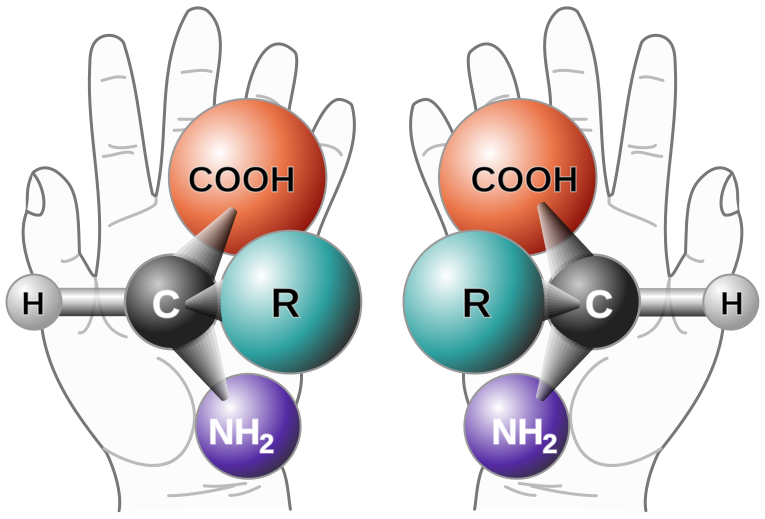
GO — matched handedness
Left task on left hand. Right task on right hand. Same side.
Matches ✓
NO-GO — wrong handedness
Left task on right hand. No rotation fixes it. Same logic as an L die on an R substrate.
Impossible ✗
The illustration on Wikipedia's chirality page — Chirality_with_hands.svg (NASA, public domain). Flip your own hands palms down: still not the same. Dice, implants, and pre-op plans obey the same rule.
Catch wrong-handed plans, mismatched trays, and capacity overload before the first incision — not in complication statistics.
Why causal levels matter
JointSpace replaces probabilistic outcome correlation with a constructive, pre-operative, computable account of team capacity — at Pearl Level 2 (intervention) and Level 3 (counterfactual protocol design).
Pearl's Ladder + do-Calculus
Open each rung. Level 1 is seeing a correlation. Level 2 is doing an intervention. Level 3 is asking what would have happened under a different protocol. Surgical decisions live at level 2.
P(outcome | high-volume team) — correlation only. Confounders unresolved.
P(outcome | do(coordination = structured)) — cuts incoming paths. The operative question.
Had the team used unstructured protocol, what would P(outcome) have been?
Level 2 · Do — The Operative Level
Pearl's do() operator represents an intervention: it cuts all incoming causal paths to a variable and sets it directly. This is the formal counterpart of a constructor operation — the team does not observe the procedure, it intervenes on every step. The dice study, instrument handoff, and parity flip in imaging are all do-actions.
The do() Equation
Observational studies correlate outcomes with team experience. These are Level 1 — they cannot answer the operational question.
- Mediator: instrument handoff state resolved per step
- Confounder: surgeon volume — correlated but not the cause
- Confounder: patient anatomy — adjust for, don't intervene on
T* — When the Plan Is Impossible
T* is where Constructor Theory meets the OR schedule: certain do-operations cannot be assembled because the physical substrates forbid it. Example: left on right — handedness mismatch — impossible, not unlikely.
Assembly index a counts required constructor steps (chirality included). T*(team) is validated team capacity. Above the line = structurally guaranteed failure.
Why causal levels matter
Constructor Theory defines what is possible or impossible. do-calculus computes the interventional distribution when the team acts as constructor. Together they enrich Shannon's Level 1 with Levels 2 and 3 — exactly as Pearl demands.
Chirality & the Shannon Critique
Shannon entropy reduces spinorial geometry (SU(2)) to one axis. That is the right tool for average channel capacity across many transmissions. It is the wrong tool for a single left- or right-handed constructor operation.
Shannon entropy (H = −Σ p(s) log₂ p(s)) assigns the same value to left-handed and right-handed configurations.
Constructor theory + do-calculus says: they are not the same world.
Spinorial Geometry & Handedness
Surgical instruments are chiral objects. A left-curved retractor is not a rotated right-curved retractor — it is a topologically distinct mirror image.
Chirality demands spinorial geometry (SU(2), double cover of SO(3)). A spinor requires 720° to return to its original state — not 360°. The path of rotation carries physical meaning.
Converting left-handed to right-handed by rotation alone. No constructor exists.
Imagining a 720° twist. Holding both handedness states and reasoning about the gap.
SU(2) — Three Projections
Handedness Across Every Scale
L-amino acids
Causbit medium
Laterality
Chiral design
Handoff path
Construction
The same chirality appears at every scale: molecules, biological structures, imaging data fields, and the "window and levels" adjustments in medical images. The gap is fractal.
Why causal levels matter
Shannon measures uncertainty over symbols (Level 1). Chirality and constructor operations require intervention on structured substrates (Level 2) and counterfactual reasoning about parity (Level 3). The dice experiment is the existence proof.
Implications & Next Steps
The same possible/impossible test applies wherever a team must complete a causally ordered construction: surgery first, then imaging methods, then a patient-held health record that keeps the actual intervention sequence.
T* — why the whole framework matters
Dice chirality → instrument handedness → plan vs substrate matching: all the same possible/impossible dichotomy. T* is the pre-operative test: is this planned sequence of do-operations physically possible for this team on this patient? If not, the case belongs in the no-go zone — do not treat impossibility as bad luck.
Pre-Operative Team Assignment
Not "is this surgeon experienced?" but "does this team's constructor capacity exceed T* for this specific chiral procedure on this specific anatomy?"
Protocol Design
Operating rhythms must keep every constructor step within demonstrated capacity. Left and right procedures require distinct rhythm protocols — different assembly graphs.
AI Coordination
Detect in real time when a team's constructor capacity approaches T* — and signal before the causal chain breaks. Not predicting the next instrument. Identifying the failure mode.
Validated Causal Identity
A team's T* derives from a validated record of procedures completed within assembly demand — a causal depth profile, not a credential or volume count.
Fractalscope for Imaging
A "window and levels" tool for parity and assembly state in fractal spatial data. The CHIRAL FLIP toggle is a real do() on data structure — making what Shannon averages away visible to statisticians.
JointSpace.org for Patients
Patient-sovereign lifetime health records that preserve the actual intervention sequence — because bodies have specific structure that averages cannot reconstruct.
Generalization Beyond Surgery
Any multi-agent operation with a causally ordered construction graph — emergency medicine, aviation, manufacturing — has a computable assembly index and a T* boundary. Surgery is the domain where causal structure is most legible and chirality most visible.
Download Full Research Posters
2018 → 2026 — Matt's Thesis to Pearl
Matthew Bishop’s UMass Boston undergraduate thesis — Modeling of Surgical Complexity: A Dice Study, May 2018 — came from running an ambulatory surgery center with Bob. Matt used R and standard statistics correctly. The premise of those tools (association, not intervention) was not challenged until Pearl’s ladder entered the work.
Thesis finding (associational — Rung 1)
lm(Time ~ StartState + Moves + DiceCount) + ANOVA. Highly significant predictors. Practical signal: 8 dice proximate ~2.5 s vs shuffle roll ~24.8 s — ~10× faster. Thesis concludes: "This is where we want to go!" — an implicit tray redesign recommendation without a formal do(proximate layout).
What undergrad stats asked
- Is start state associated with time?
- Null hypothesis + p-values + ensemble means
- Never: is regression the right tool to license intervention?
What Pearl permissions (2018–2026)
P(time | do(proximate layout))- Chirality, spin orientation, T* no-go zone
- Right implant on left femur = impossible, not unlikely
Why Pearl wasn't in Matt's stats curriculum
Fisher/Neyman–Pearson heritage; Book of Why published the same month as the thesis; lm() encodes associational questions; causal inference was grad-level, not UMass Boston undergrad core. Matt had rare ASC ground truth — statistics never matched that embodied knowledge.
Full timeline, empirical photos, video, and interactive arc on the dashboard version:
Open jointspace-interactive →